Rotary Gas Expander Technology
How it Works
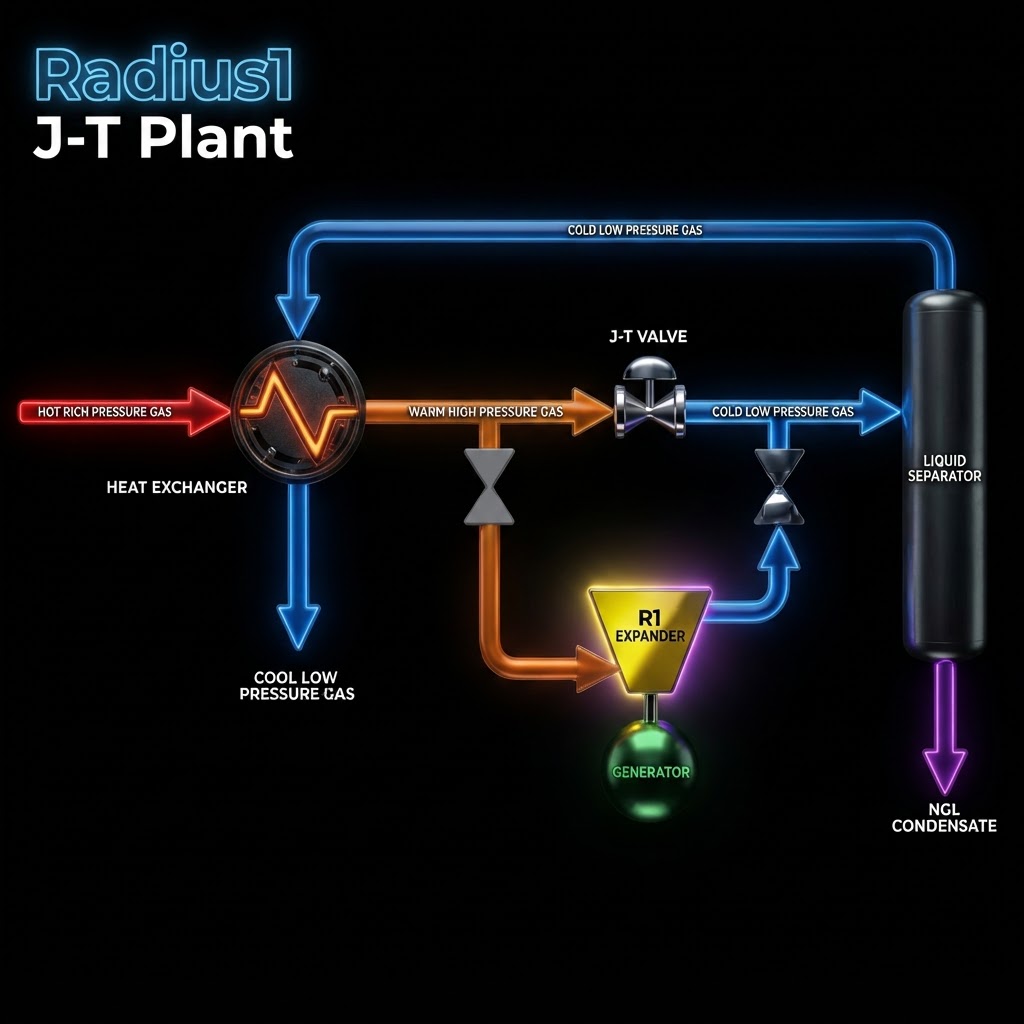
The expander drives a generator, converting work energy that would otherwise be lost across the JT valve into electricity without combustion. By removing this energy from the gas stream, outlet gas temperatures become colder. Electricity generated by the expander can be used to power heat tracers as means to prevent hydrate formation and lower methanol consumption. It can also be used to offset power consumed by jack pumps or other onsite equipment such as lighting and security cameras.
The expander skid is a Class I Div II 'plug-n-play' system that ties directly into any operating JT skid. The package includes remote monitoring, PLC controller, isolation and control valves, sensors, PSV, and other necessary safety features. If the expander needs servicing, the isolation valves redirect flow back across the JT valve, preventing any unwanted production downtime during the handoff.
About the Expander
The expander is rated to 1,440 MWP at the inlet with a max ΔP of 1,000 psi between intake and exhaust. As a rotary positive displacement device, it operates at low speed (less than 4,000 rpm) and can process 'wet' gas even if flow rates constantly vary. The design is inherently self-cleaning, making freeze-up and scaling from field gas impurities a non-issue.
Current expander skid size: 1-5mmcfd. The first skids will be available late 2026, skids can run in parallel to capture higher flow rates.
Case Studies
Engineered for Performance
Our rotary gas expander is a game changer for wellhead gas processing enhancing efficiency, reducing emissions, and generating electricity.
Plug-and-Play Integration
Simply bypass the JT valve with our rotary gas expander. Ties into your existing JT skid with minimal downtime and no infrastructure overhaul.
Enhanced NGL Recovery
Achieve up to 65% more NGL recovery. The expander skid is rated to -50°F and delivers MRU-level performance without the MRU complexity.
Self-Cleaning & Reliable
Engineered for harsh wellhead environments with self-cleaning rotary technology. Minimal maintenance, maximum uptime in remote locations.
Electricity Generation
Generate electricity to offset jack pump power consumption and electric trace heating, reducing methanol consumption by up to 50%.